
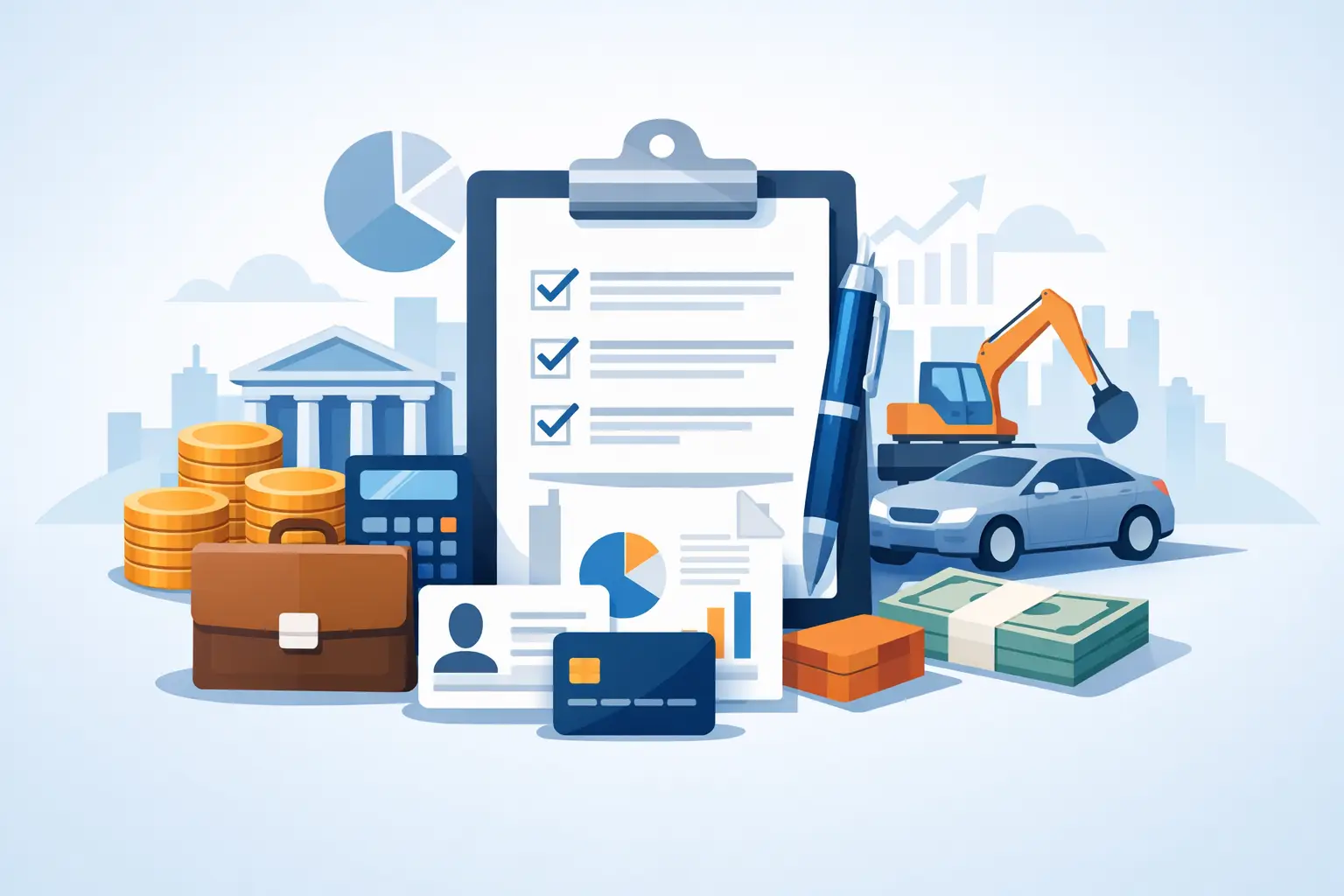
You have found the right car, ute, truck, caravan or piece of equipment, and then the lender asks for paperwork. That is usually the point people start asking, what documents do I need for asset finance? The short answer is that it depends on what you are buying, whether you are employed or self-employed, and which lender is assessing the deal – but there is a fairly consistent set of documents most borrowers should have ready.
The good news is that asset finance paperwork is often more straightforward than people expect. In many cases, the asset itself helps secure the loan, which can make the process simpler than other forms of lending. Still, getting your documents together early can be the difference between a fast approval and a drawn-out back-and-forth.
What documents do I need for asset finance in Australia?
Most lenders want enough information to confirm three things. First, they need to know who you are. Second, they need to see that you can afford the repayments. Third, they need details about the asset being financed.
For many applicants, that means providing identification, proof of income, bank statements and information about the asset. If you are applying through a business, lenders may also ask for ABN details, GST registration, business financials or BAS statements.
That sounds like a lot on paper, but not every borrower will need every document. A PAYG employee buying a car for personal use usually has a shorter checklist than a business owner financing multiple trucks or specialised equipment.
The core documents most lenders ask for
The starting point is usually proof of identity. This can include your driver licence, passport or Medicare card, depending on the lender’s verification process. Some lenders can verify identity electronically, while others still want clear copies of documents.
Next is proof of income. If you are employed, recent payslips are commonly requested, and sometimes your latest group certificate, income statement or tax return as well. Lenders want to see that your income is stable and enough to comfortably cover the repayments alongside your existing expenses.
Bank statements are also common. These help lenders confirm your salary credits, spending patterns and whether you are managing your accounts well. Usually, they will ask for a recent period rather than years of history, but the exact timeframe can vary.
Then there are the asset details. This often includes a tax invoice, purchase order, supplier quote or private sale contract. If the asset is a vehicle, lenders may also want registration details, VIN or chassis number, make, model, year and kilometres. For equipment, they may want the serial number, supplier details and a clear description of what is being purchased.
If you are a PAYG employee
If you are employed full-time, part-time or casual, the document list is often relatively simple. In many cases, a lender will ask for your ID, recent payslips, bank statements and the invoice for the asset.
Where it can vary is around your employment history. If you have recently changed jobs, are still in probation, or your income includes overtime, allowances or bonuses, the lender may want a little more detail. That could mean extra payslips, an employment letter or evidence that the variable income is consistent.
If you are financing a higher-value asset, the lender may also take a closer look at your liabilities. Existing loans, credit cards and buy now pay later accounts can affect borrowing capacity, even if your income looks solid.
If you are self-employed or running a business
This is where the question what documents do I need for asset finance can have a broader answer. Self-employed borrowers and business owners often need to provide more evidence because income can be less straightforward than a standard wage.
Common documents include your ABN, GST registration if applicable, recent BAS, business bank statements and tax returns. Some lenders may also ask for notices of assessment, accountant-prepared financials or trading history to show the business is operating consistently.
If you have been self-employed for less than two years, document requirements can tighten. Some lenders are comfortable with less history if the deal is strong and the borrower has industry experience, but others will want a longer track record. This is one of those areas where lender policy matters a lot.
For directors of companies or trustees of trusts, extra documents can come into play as well. That may include company information, trust deeds or director identification details. It is not unusual for lenders to request both business and personal information when assessing a business asset application.
Documents for the asset itself
The asset paperwork matters more than many people realise. The lender is not just assessing you – they are also assessing what they are funding.
For a car, ute, van, truck, motorbike, caravan or boat, the lender generally wants a quote or invoice showing the seller’s details, the purchase price and the exact asset details. If it is a dealer sale, this is usually straightforward. If it is a private sale, some lenders may ask for extra documents or place restrictions on the asset’s age or condition.
For equipment finance, the lender may want a formal supplier invoice that clearly describes the item. If the equipment is specialised, imported or custom-built, they may ask additional questions about use, resale value or delivery timing.
Used assets can also require more checks than new ones. A lender may look at age, kilometres, operating hours or overall condition before confirming approval. In some cases, they may even request photos or an independent valuation.
What can speed up approval?
Clear, current documents make a real difference. If your licence is expired, your payslips are outdated, or the invoice does not match the application, it can slow everything down.
It also helps if the names line up across your documents. Small mismatches between your licence, bank statements and application can trigger extra verification steps. The same goes for business applications where the trading name, entity name and ABN details need to be consistent.
Another common delay is incomplete asset information. If the lender does not have enough detail about what is being purchased, they may hold off on issuing formal approval. That is why having a proper supplier quote or invoice upfront is so useful.
Why lenders sometimes ask for more than expected
Not every application fits neatly into a standard checklist. A lender may request extra documents if your credit file shows recent enquiries, your income is irregular, the asset is older, or the loan amount is higher than usual.
This does not always mean there is a problem. Often, it simply means the assessor wants to get comfortable with the deal before signing off. The stronger the supporting information, the easier it is to answer those questions quickly.
Different lenders also have different appetites. One lender may be happy with recent bank statements and an invoice, while another may want tax returns and extra proof of income. This is one reason broker-led support can save time – instead of guessing what each lender wants, you can be guided toward options that suit your situation.
A practical way to get ready
If you want the process to feel simple, prepare your documents before you apply. Start with your ID, recent income evidence, bank statements and the asset invoice or quote. If you are self-employed, add your ABN, BAS and tax documents to the pile.
Make sure scans or photos are legible, with all corners visible and details easy to read. Lenders cannot assess what they cannot verify. It sounds basic, but poor-quality uploads are one of the easiest ways to lose time.
If you are not sure what will be needed, ask early rather than waiting for a document request after submission. A good broker will usually narrow the list down quickly based on whether you are PAYG, self-employed, buying new or used, and applying as an individual or business. That is exactly where a team like Rivercity Finance can take a lot of the guesswork out of the process.
Asset finance does not have to mean a mountain of paperwork. Most of the time, it is about having the right documents ready, not every document under the sun. If you can show who you are, how you earn, and what you are buying, you are already a long way toward a faster, less frustrating approval.