
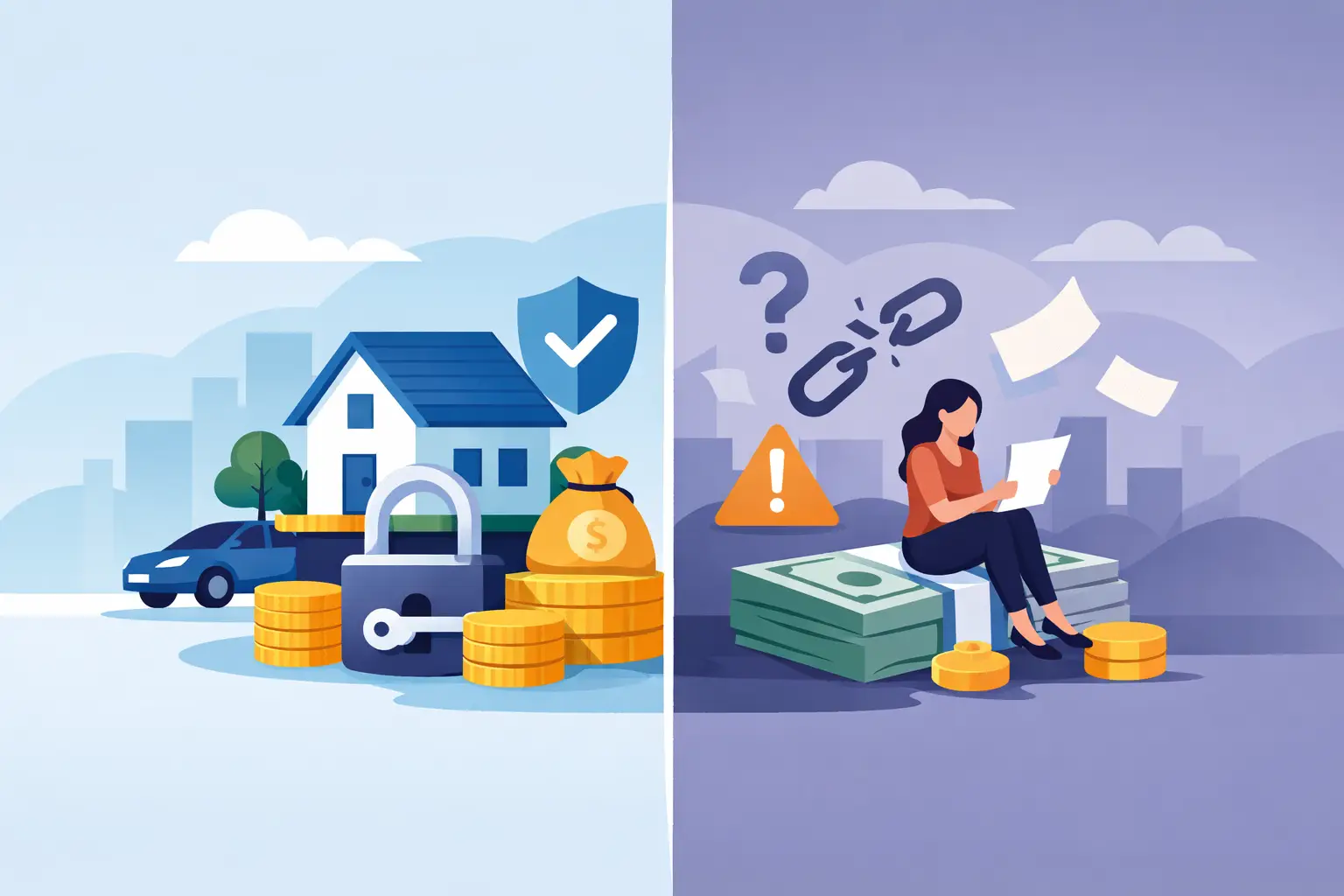
A lower rate can look great on paper, but the wrong loan structure can cost you more in stress, flexibility or risk. When comparing secured vs unsecured personal loans, the real question is not just which one is cheaper. It is which one fits your situation, your asset position and how quickly you need finance.
For Australian borrowers, the difference usually comes down to one thing – security. A secured personal loan is backed by an asset, while an unsecured personal loan is not. That single difference affects interest rates, borrowing limits, approval criteria and what happens if things do not go to plan.
Secured vs unsecured personal loans: the key difference
A secured personal loan uses an asset as security for the finance. In many cases, that asset is the item being purchased, such as a car, ute, caravan, boat or motorcycle. Because the lender has security over the asset, they are taking on less risk.
An unsecured personal loan does not require a specific asset to be offered as security. The lender is relying more heavily on your credit history, income, overall financial position and repayment capacity. Because there is no asset backing the loan, the lender’s risk is higher.
That sounds simple enough, but the practical effects are where the decision gets more important.
How secured personal loans work
With a secured loan, the lender registers an interest over the asset. If you keep up with repayments, that usually makes little difference to your day-to-day experience. You use the vehicle or asset as normal while making repayments over the agreed term.
Because the lender has security, secured loans often come with lower interest rates than unsecured options. They may also allow you to borrow more, especially when the asset has a clear resale value. This is one reason secured finance is common for vehicles and other high-value purchases.
For someone buying a work ute, upgrading a family car or financing a caravan, a secured loan can be a practical fit. It often aligns the finance to the asset being purchased, and lenders may be more comfortable offering stronger terms.
The trade-off is that the asset is on the line. If you fall behind badly enough and the issue cannot be resolved, the lender may have the right to repossess and sell the secured asset.
Common uses for secured personal loans
Secured personal loans are often used when there is a clear, identifiable asset attached to the borrowing. Car finance is the most obvious example, but the same can apply to motorcycles, boats and caravans.
This structure can suit borrowers who want lower repayments, a clearer approval path or access to a larger loan amount than they may get without security.
How unsecured personal loans work
An unsecured personal loan is generally more flexible in terms of what the funds can be used for, depending on the lender’s policy. Because there is no asset securing the loan, the process may feel simpler in some cases, especially if there is no vehicle or equipment purchase involved.
That said, simple does not always mean easier to qualify for. Since the lender has no security to fall back on, approval often depends more heavily on strong credit, stable income and a comfortable level of existing commitments.
Interest rates are usually higher than secured loans, and the amount you can borrow may be lower. Loan terms can also differ depending on the lender and your overall profile.
For borrowers who do not want to tie an asset to the finance, or who are borrowing for a purpose that does not involve a suitable asset, an unsecured loan may make sense. But you are often paying for that flexibility through a higher rate.
Secured vs unsecured personal loans on cost
If cost is your main focus, secured loans often come out ahead. Lower lender risk generally means lower interest rates. Over the life of a loan, that can make a noticeable difference to the total amount repaid.
Still, rate should not be looked at in isolation. Fees, loan term, repayment structure and whether the loan suits the purpose all matter. A lower rate on the wrong structure is not automatically the better deal.
For example, if you secure a loan against a vehicle but need the flexibility of an unsecured product, the lower rate may not outweigh the restrictions. On the other hand, if you are buying a car anyway, choosing an unsecured loan simply because it feels less formal could mean paying more than necessary.
Approval criteria and borrowing power
Approval for both loan types comes down to serviceability and credit profile, but secured and unsecured loans are assessed differently.
With secured finance, the asset helps support the application. Lenders may be more open to larger amounts or more competitive pricing if the security is suitable and within policy. The type, age and condition of the asset can matter, especially with vehicles.
With unsecured finance, lenders tend to look more closely at your income stability, employment position, credit conduct and existing debts. If you are self-employed, documentation requirements may vary, and some lenders will be more flexible than others.
This is where borrower profile matters. A salaried applicant with strong income and clean credit may have several unsecured options. A self-employed tradie buying a late-model ute for work may find secured finance gives a better result.
Risk matters more than most borrowers think
The biggest difference in secured vs unsecured personal loans is not just price. It is risk.
With a secured loan, the lender has a direct claim over the asset. That can be perfectly reasonable when the asset is the reason for the loan, but it does increase the stakes if repayments become difficult.
With an unsecured loan, there is no single asset attached. That does not mean there are no consequences for default. Missed repayments can still affect your credit file, trigger collections activity and create further financial pressure. But there is not a specific car, boat or caravan sitting behind the loan as security.
Some borrowers are comfortable using security because it improves the loan terms. Others would rather avoid that exposure, even if it means paying a higher rate. Neither approach is automatically right. It depends on your priorities and how strong your repayment position is.
Which option may suit you best?
If you are purchasing a vehicle or another clear asset, a secured loan is often the more practical option. It can mean lower rates, stronger borrowing capacity and terms that match the purchase. This is especially relevant for borrowers financing cars, utes and similar assets where lenders are comfortable taking security.
If you are not buying an asset, do not want to use one as security, or value flexibility over pricing, an unsecured loan may be the better fit. You may pay more, but the structure could suit your circumstances better.
Speed can also play a role. Some secured applications are straightforward, especially when the asset details are clear and the lender specialises in that space. In other cases, an unsecured loan may move faster because there is no valuation or asset-related approval condition. It really depends on the lender, the purpose and how clean the application is.
Why the lender choice matters
Not every lender treats secured and unsecured loans the same way. Rates, acceptable assets, credit policy and document requirements can vary widely. Two borrowers with similar profiles may get very different outcomes depending on which lender assesses the deal.
That is why comparison matters. A borrower financing a work vehicle may have more options through lenders who understand asset-backed lending. Someone self-employed may need a lender that takes a more practical view of income verification. Matching the application to the right lender can be just as important as choosing between secured and unsecured.
At Rivercity Finance, that is often where the value sits – cutting through lender policy differences and helping clients find a finance option that actually fits, without unnecessary complexity.
A straightforward way to think about it
If the loan is tied to an asset and you want the sharpest pricing, secured finance is usually the first option worth exploring. If flexibility matters more and you do not want an asset attached to the loan, unsecured finance may be the better path.
The right choice is usually the one that balances cost, speed, risk and practicality for your situation. A good loan does not just get approved. It needs to make sense once the repayments start.